
The Question Every Homeowner Asks First
If you're considering a kitchen remodel in San Diego, the very first question on your mind is probably: How long is this going to take? It's a fair question. Your kitchen is the most-used room in the house, and living without it — even temporarily — changes your entire daily routine.
The honest answer is that timelines vary based on the scope of work, material availability, permit requirements, and unexpected surprises hiding behind your walls. But after years of remodeling kitchens across Rancho Peñasquitos, Scripps Ranch, Poway, and surrounding neighborhoods, we've learned that most mid-range to full kitchen remodels follow a predictable rhythm.
Here's a realistic week-by-week breakdown of what a typical San Diego kitchen remodel looks like from start to finish — and what you can do to keep things moving smoothly.
Before Construction: The Pre-Build Phase (4–8 Weeks)
This is the phase most people underestimate. Before a single cabinet is removed, there's a significant amount of planning, designing, and ordering that needs to happen.
Design and Planning (Weeks 1–3)
During the first few weeks, you'll work with your remodeling team to finalize the layout, select materials, and nail down the scope of the project. Key decisions include:
- Cabinet style, finish, and configuration
- Countertop material (quartz, granite, butcher block, etc.)
- Appliance selections and placement
- Flooring, backsplash, and lighting choices
- Plumbing and electrical changes
Making these decisions early — and sticking with them — is the single biggest thing you can do to prevent delays down the road.
Permits and Material Orders (Weeks 3–8)
If your remodel involves moving walls, relocating plumbing, or changing electrical layouts, you'll likely need permits from the City of San Diego. Permit timelines vary, but budgeting three to four weeks for approval is a safe bet. Meanwhile, your contractor should be ordering cabinets, countertops, and any specialty materials. Custom cabinetry, for example, can take four to six weeks to fabricate and deliver.
Pro tip: This overlap between permitting and material lead times is actually a good thing. A smart contractor uses this waiting period efficiently so that everything arrives right when construction is ready to begin.
During Construction: The Build Phase (6–10 Weeks)
Once permits are approved and materials start arriving, construction begins. Here's how it typically unfolds.
Week 1: Demolition
Demo day is exciting and loud. Your old cabinets, countertops, flooring, and sometimes walls come out. This is also when your contractor gets a clear look at the condition of your plumbing, electrical wiring, and subfloor. In older San Diego homes — especially those built in the 1970s and 1980s across communities like Mira Mesa and Carmel Mountain Ranch — this is when hidden issues like outdated wiring or minor water damage tend to surface.
Don't panic if your contractor flags something unexpected. It's far better to address it now than to bury it behind new drywall.
Weeks 2–3: Rough-In Work
This is the behind-the-scenes phase where electricians, plumbers, and sometimes HVAC technicians do their work. If you're adding an island with a sink, moving your refrigerator to a new wall, or upgrading to a gas range, this is when those utility lines get rerouted.
Once rough-in work is complete, the city inspector will need to sign off before your contractor can close up the walls. Scheduling inspections promptly keeps the timeline tight.
Weeks 3–4: Drywall, Patching, and Painting
With inspections passed, drywall goes up, seams are taped and mudded, and the room starts to look like a kitchen again — at least in shape. Walls get primed and painted, and the space is prepped for the finish materials that are about to transform it.
Weeks 4–6: Cabinets and Flooring
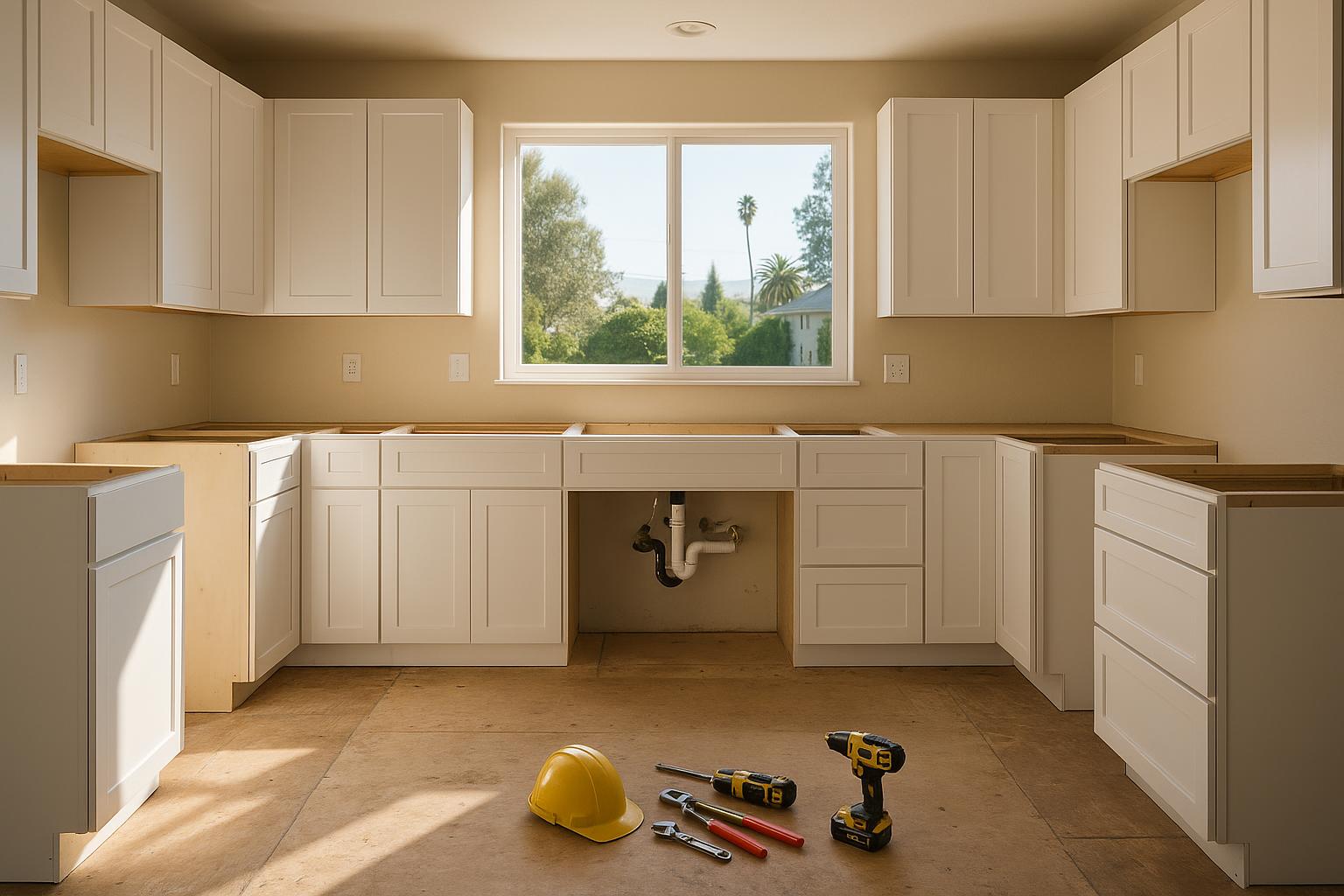
This is where the transformation becomes visible and exciting. Cabinets are installed first, carefully leveled and secured. Flooring goes in around the same time, depending on the material. Hardwood and luxury vinyl plank are common choices for San Diego kitchens because they handle temperature fluctuations well and are easy to maintain.
Once cabinets are set, your countertop fabricator will come out to take final measurements. Yes, even if they measured during the design phase, they'll template again now that the cabinets are physically in place. Precision matters.
Weeks 6–8: Countertops, Backsplash, and Fixtures
Countertops are fabricated and installed, usually within one to two weeks of final templating. After that, the backsplash goes up, plumbing fixtures are connected, and appliances are set in place. Electricians return to install under-cabinet lighting, outlets, and switches with their final trim plates.
This phase feels fast because you can see daily progress, and it's incredibly satisfying to watch your new kitchen come together.
Weeks 8–10: Final Details and Punch List
The last stretch is all about the details. Cabinet hardware is installed. Trim and molding are added. Touch-up paint covers any scuffs from construction. Your contractor should walk through the entire kitchen with you, creating a punch list of any minor items that need attention — a drawer that doesn't close perfectly, a paint drip on the baseboard, a light switch plate that's slightly crooked.
A good remodeling company treats the punch list seriously. These small details are the difference between a kitchen that looks finished and one that looks flawless.
What Can Cause Delays?
Even with careful planning, some things can push your timeline out. The most common culprits include:
- Change orders mid-project: Deciding to switch your countertop material after cabinets are installed can add weeks.
- Backordered materials: Supply chain issues have improved but haven't disappeared entirely. Ordering early helps.
- Permit delays: Some jurisdictions move slower than others. Your contractor should have a good read on current City of San Diego timelines.
- Structural surprises: Termite damage, outdated plumbing, or load-bearing walls that weren't identified in the original plans.
The best way to minimize delays is to work with a contractor who communicates clearly, plans thoroughly, and has strong relationships with local subcontractors and suppliers.
How to Survive Without Your Kitchen
Living through a kitchen remodel is a temporary inconvenience for a permanent upgrade. Here are a few tips San Diego homeowners have shared with us over the years:
- Set up a temporary kitchen station in your garage or dining room with a microwave, mini fridge, and electric kettle.
- Stock up on paper plates and disposable utensils — you'll thank yourself later.
- Take advantage of San Diego's incredible food scene. Consider it a guilt-free excuse to explore new restaurants.
- If you have an outdoor grill, use it. Our climate makes year-round grilling easy.
The Finished Product Is Worth the Wait
A full kitchen remodel is a significant investment of time, money, and patience. But when you step into your new kitchen for the first time — with the countertops you chose, the layout that finally makes sense, and the lighting that makes the whole room glow — every week of the process feels worth it.
At Aspen Home Extensions, we walk our clients through every phase of the remodel with honest timelines and clear communication. If you're thinking about remodeling your kitchen in San Diego, Rancho Peñasquitos, Poway, or any of the surrounding communities, we'd love to talk through what a realistic timeline looks like for your specific project.